
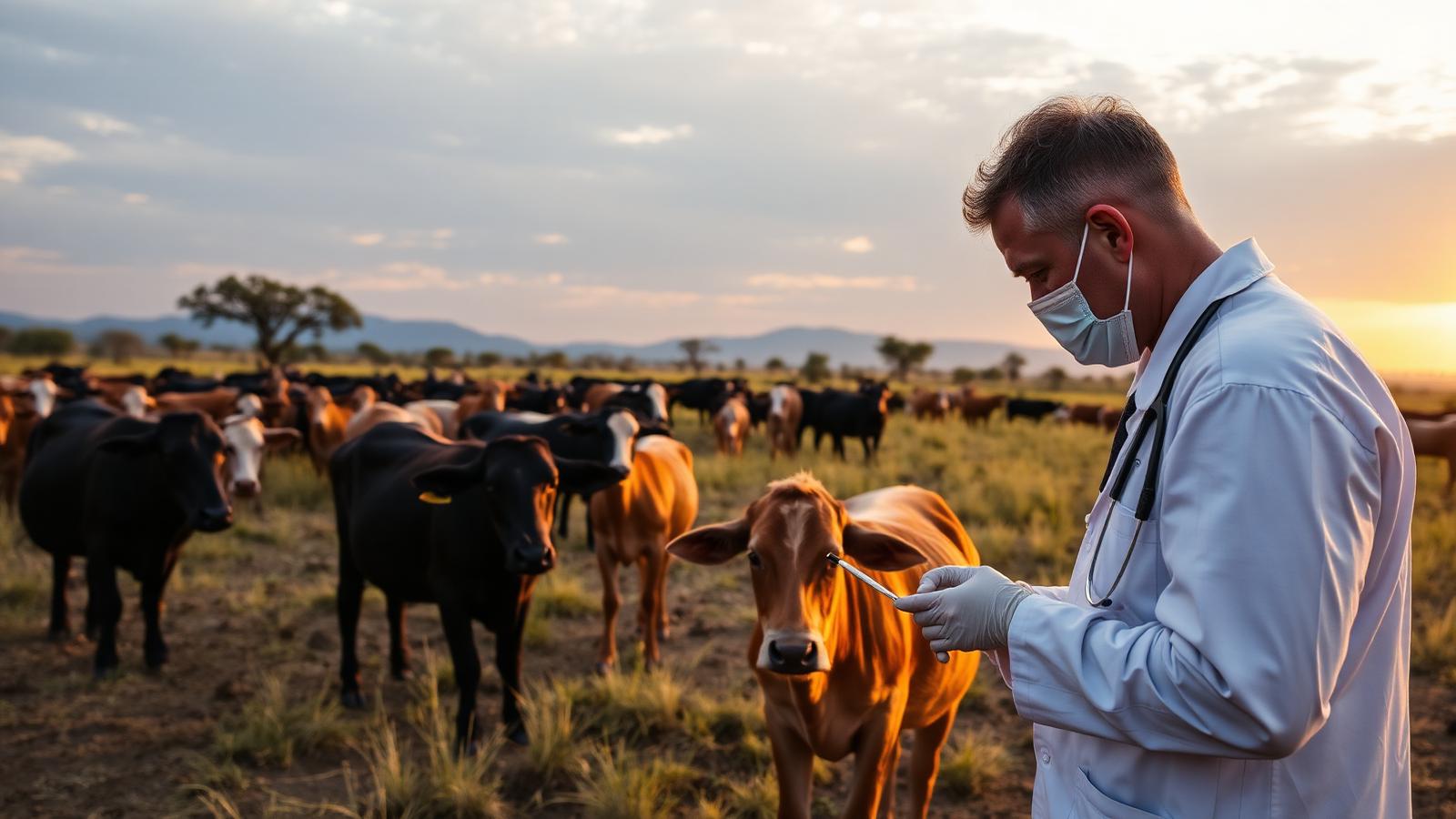
East Africa's livestock economy is professionalising, and the veterinary product market is being pulled along with it. Government-backed dairy modernisation in Kenya, commercial poultry expansion in Uganda, and Tanzania's national livestock investment plan are together creating structural, non-cyclical demand for vaccines, feed additives, anti-infectives and nutritional supplements.
The market is meaningfully under-served. Western multinationals focus on companion animals in premium urban markets; local producers cannot match the breadth or price of Indian manufacturing. Chinese suppliers compete on price but consistently lose on formulation quality and post-sale technical support. That gap — quality plus price plus technical service — is exactly what mid-sized Indian veterinary manufacturers are built to fill.
Kenya is the natural entry point. It has the region's most developed veterinary retail channel (agri-vet shops, cooperatives, poultry integrator networks), the strongest regulatory framework (Kenya Veterinary Board and Pest Control Products Board), and distribution corridors that reach into Uganda, Tanzania and Rwanda through both formal and informal trade. A brand that wins in Kenya can usually reach EAC-wide coverage within 24 months.
Product-market fit is clearest in three segments. First: poultry vaccines and feed additives, driven by the rapid growth of commercial broiler and layer operations across the region. Second: bovine anti-infectives and nutritional supplements, driven by the dairy cooperative movement in Kenya and Uganda. Third: small-ruminant and companion animal products in urban centres, a smaller but higher-margin segment.
Distribution requires a partner with genuine reach into cooperatives and government tender channels — not just Nairobi-based agri-vet retail. The best distributors combine a technical field force (veterinarians and para-vets who can train agri-vet shop staff and farmers), a physical branch network in secondary towns, and existing relationships with the Kenya Veterinary Board and government procurement units.
Registration timelines are moderate: 6–9 months for most veterinary products in Kenya, with mutual-recognition arrangements accelerating filings in Uganda and Tanzania once Kenya is secured. Product dossiers built for Indian domestic regulation typically need only translation and format changes — this is not a regulatory-heavy market.
The commercial arc is patient but predictable. Expect 18–24 months from first shipment to steady-state off-take, with the first 12 months dominated by field trials, farmer education and cooperative onboarding. Manufacturers who commit to that timeline — and invest in a technical service manager based in Nairobi — build defensible market share. Those who treat East Africa as a series of one-off container orders are almost always displaced within two years.
One overlooked lever is government tenders. Kenya, Uganda and Tanzania all run periodic public procurement for vaccines and anti-parasitics. Winning even one tender establishes credibility that accelerates private-channel adoption. Distributors with strong government relationships are worth a meaningful premium in commission economics.